



Bahawalpur occupies a specific place in Pakistan’s travel imagination — recognized as a historic city with Nawabi heritage, famous for its Noor Mahal palace, but rarely treated as a complete travel destination in the way that northern destinations like Hunza or Swat are marketed. Rehan Azhar’s coverage of the region went beyond the headline attractions to document two experiences that his community found genuinely surprising and worth planning around.
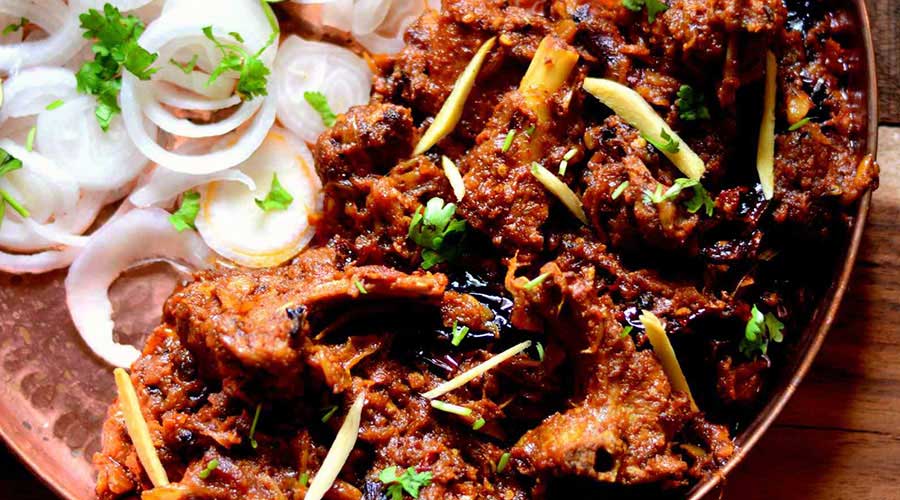
Ranja Gosht is a preparation that Rehan’s audience encountered through his Bahawalpur content and immediately wanted to know more about. It is a slow-cooked meat dish specific to the region, prepared in a way that produces a depth of flavor distinct from the karahi or nihari traditions that dominate the conversation about Pakistani food. The dish’s local nature is part of what makes it interesting — ranja gosht is not something you find replicated accurately in Lahori restaurants or widely available outside its home region. Eating it in Bahawalpur is not merely the most authentic version. It may be the only version worth eating.
This is a recurring theme in Rehan’s domestic content that deserves direct attention. Pakistan’s regional food traditions are extraordinarily diverse, and the cuisines of southern Punjab in particular are underrepresented in the food media that reaches urban Pakistani audiences. The default conversation about great Pakistani food centers on Lahori karahi, Karachiite biryani, and the big-city dining scene. What Rehan’s trips to places like Bahawalpur document is that the most interesting food in Pakistan is often made in smaller cities and rural areas by cooks who have been refining specific dishes for generations, largely unnoticed by the food media.
The Lal Suhanra National Park is another significant discovery from this content. The park is a protected area outside Bahawalpur that serves as a sanctuary for the chinkara and the blackbuck, the latter of which was effectively extinct in Pakistan at one point and has recovered through conservation efforts at Lal Suhanra. Seeing blackbucks in a Pakistani national park is not a well-known travel option, and Rehan’s coverage introduced this to an audience with no prior awareness that such wildlife exists within reach of a straightforward road trip from Lahore.
The conservation angle is worth sitting with. Pakistan’s wildlife conservation conversation tends to focus on the snow leopard in the northern mountain regions, which is a legitimate and important story. The blackbuck recovery at Lal Suhanra is a quieter success story in a very different ecosystem, and it is exactly the kind of thing that domestic travel content can make visible in ways that official tourism promotion often fails to.
The village life documentation that runs through the Bahawalpur content — the makki harvest scenes, the morning chai setup, the rural rhythms of a Punjab that functions entirely differently from its urban version — adds a texture to the trip that pure destination content cannot provide. Rehan’s interest in showing how people in these areas actually live, rather than just what the famous landmarks look like, sets his domestic coverage apart from standard travel vlogging and is what his community responds to most warmly.