



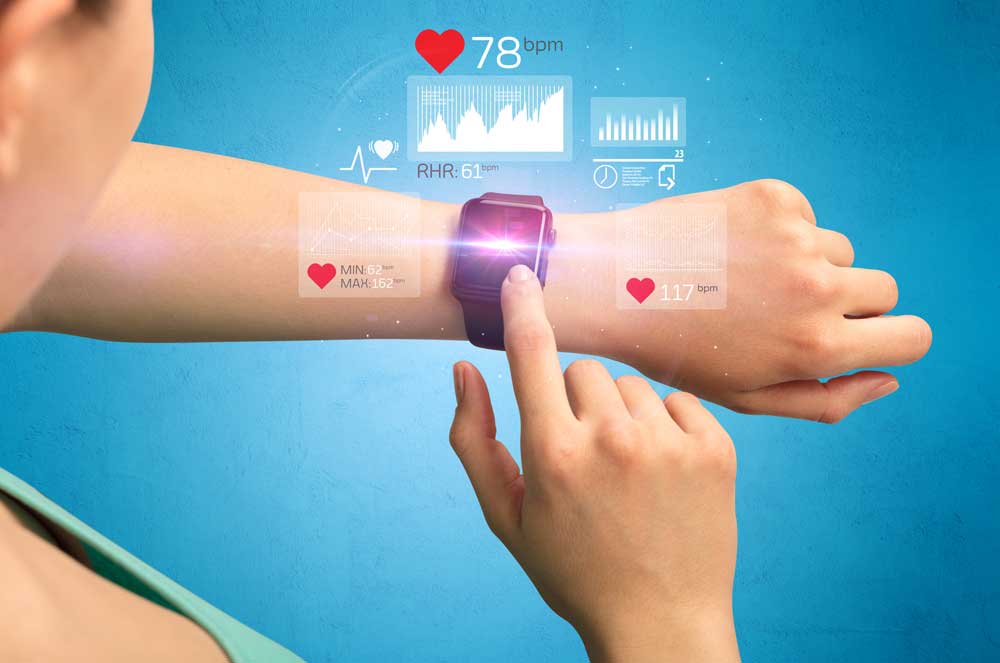
The paradigm of modern healthcare is undergoing a profound shift from reactive treatment to proactive prevention. Historically, individuals only interacted with medical professionals after experiencing acute symptoms, leaving a massive data vacuum between annual checkups. The widespread adoption of consumer wearable devices has completely altered this dynamic. By continuously monitoring physiological biomarkers, smart rings, fitness trackers, and advanced smartwatches provide a continuous stream of real-time wellness metrics. This biometric tracking empowers individuals to take charge of their daily habits, facilitates early clinical intervention, and changes how people manage their chronic conditions.
The Evolution of Consumer Health Sensors
The transition of wearable tech from basic step counters to medical-grade biometric monitors represents a significant technological leap. Early iterations of these devices relied on basic mechanical accelerometers designed to estimate physical activity through kinetic movement. Today, modern wearables pack sophisticated sensor arrays capable of gathering complex physiological data points directly from the skin and blood vessels.
Photoplethysmography and Heart Rate Variability
Most consumer wristbands and rings utilize photoplethysmography, a technology that shines specialized light frequencies, typically green or infrared, through the outer layers of the skin. By analyzing the way this light reflects off the expanding and contracting blood vessels beneath, the device can compute heart rate with extreme precision.
Beyond simple beats per minute, these sensors capture Heart Rate Variability, which measures the specific microsecond variations between consecutive heartbeats. This metric offers an objective view into the autonomic nervous system, serving as an indicator of physiological stress, physical recovery, and general nervous system balance.
Advanced Diagnostic Integrations
The capabilities of modern wearables extend far beyond basic pulse tracking. Advanced consumer devices now incorporate complex diagnostic arrays including:
-
Electrocardiogram Sensors: By creating a closed electrical circuit across the user’s body, these devices can generate single-lead electrocardiograms capable of identifying cardiac irregularities like atrial fibrillation.
-
Pulse Oximetry Modules: Utilizing red and infrared light absorption ratios, these sensors measure peripheral blood oxygen saturation levels, providing early warnings for respiratory complications or sleep apnea.
-
Electrodermal Activity Sensors: These track subtle changes in the skin’s electrical conductance driven by sweat gland activity, giving users concrete data regarding their immediate emotional and psychological stress responses.
Driving Behavioral Modification and Fitness Optimization
Continuous biometric monitoring plays an essential psychological role in driving sustained behavioral modification. Human psychology responds strongly to immediate feedback loops, and wearables deliver this data in real time, making the abstract concept of personal health highly tangible.
Quantifying Physical Activity and Recovery
The inclusion of granular physical activity metrics prevents individuals from overestimating their daily movement. By tracking active calorie burn, standing hours, and exercise intensity zones, wearables push users toward meeting established cardiovascular guidelines.
Furthermore, the introduction of proprietary recovery scores has helped shift consumer focus from overtraining to balanced wellness. By contextualizing sleep quality, resting heart rate, and recent physical exertion, these devices actively advise users when to push their physical limits and when to prioritize rest, reducing the risk of burnout or soft-tissue injury.
Enhancing Sleep Architecture Tracking
Sleep is one of the most critical, yet frequently neglected, pillars of systemic health. Wearables analyze movement patterns and cardiovascular shifts to map out an individual’s sleep architecture, breaking down the night into light, deep, and rapid eye movement sleep phases.
Seeing how alcohol consumption, late-night dining, or evening screen time systematically degrades deep sleep architecture provides users with the empirical evidence required to alter their evening routines and prioritize sleep hygiene.
Chronic Disease Management and Remote Patient Monitoring
While behavioral modifications benefit the general population, the integration of wearable devices into chronic disease management has profound, life-altering implications for vulnerable demographics.
Continuous Glucose Monitoring and Metabolic Health
For individuals navigating type one or type two diabetes, standard finger-stick blood draws provide nothing more than isolated snapshots of glucose levels. The development of continuous glucose monitors, which utilize a tiny subcutaneous sensor to track interstitial fluid glucose levels every few minutes, has revolutionized metabolic care.
When synced with smartphones or smartwatches, these systems alert users to impending hypoglycemic or hyperglycemic events before they escalate into medical emergencies. For those without diagnosed metabolic conditions, temporary use of these sensors highlights exactly how specific carbohydrate loads and dietary patterns trigger destabilizing glucose spikes and subsequent energy crashes.
Hypertension and Cardiovascular Vigilance
Hypertension is often dubbed a silent killer because it rarely presents obvious physical warnings until significant systemic damage has occurred. Wearables featuring continuous, cuffless blood pressure monitoring allow individuals to track pressure fluctuations throughout the day and night.
This data helps clinicians evaluate the real-world efficacy of antihypertensive medications outside the artificial, stress-induced environment of a medical clinic, preventing the common phenomenon known as white-coat hypertension from skewing prescription dosages.
The Intersection of Wearables and Clinical Medicine
The true power of personal health technology is unlocked when consumer data integrates seamlessly into formal clinical workflows, creating a collaborative dynamic between patients and physicians.
Early Detection of Acute Anomalies
Because wearables track baseline physiological averages over months, their software algorithms can instantly flag sudden statistical deviations. A sudden, unexplained rise in resting heart rate coupled with a drop in heart rate variability frequently serves as a leading indicator of an impending viral infection, often alerting the user up to 48 hours before physical symptoms manifest.
Similarly, automated fall detection features utilize high-g accelerometers to sense when an elderly user suffers a hard fall, automatically broadcasting GPS coordinates to emergency services and designated family contacts if the user remains unresponsive.
Overcoming Data Fragmentation
The historical model of medicine suffered heavily from data fragmentation, where doctors had to make long-term treatment decisions based on a few minutes of in-office observation. By exporting comprehensive monthly biometric PDF reports directly from consumer health applications, patients can provide their cardiologists, endocrinologists, or primary care physicians with hundreds of hours of contextualized real-world data, leading to personalized, highly accurate treatment paths.
Addressing Data Privacy and Technological Limitations
Despite the immense benefits of personal health tech, users must remain aware of the privacy concerns and technical boundaries that characterize the current landscape.
Accuracy Variance and Calibration
Consumer wearables are highly advanced, but they are not infallible medical instruments. Skin tone, device placement, motion artifacts during intense exercise, and rapid temperature changes can introduce noise into optical sensors. Users must understand that these tools are designed to track long-term trends and general health patterns rather than providing absolute, standalone diagnostic measurements.
Safeguarding Biometric Data Assets
The continuous collection of highly intimate biometric data raises significant privacy challenges. Because consumer technology companies are not always bound by the strict regulatory frameworks that govern traditional medical providers, the terms of service regarding data monetization require careful inspection. Users should actively verify that their chosen platform utilizes end-to-end encryption, secures data storage repositories, and guarantees that biometric profiles will not be quietly sold to health insurance corporations or third-party advertising networks.
Frequently Asked Questions
Can consumer smartwatches completely replace traditional blood pressure cuffs?
Consumer smartwatches featuring cuffless blood pressure monitoring cannot completely replace medical-grade oscillometric cuffs. Watch-based systems typically estimate blood pressure by measuring pulse transit time, which requires regular calibration against a standard inflatable cuff to maintain accuracy. They serve as excellent tools for tracking daily trends and relative changes, but diagnostic validation still requires traditional equipment.
How do changes in ambient temperature affect the biometric readings of a wearable device?
Extreme ambient cold can cause peripheral vasoconstriction, where blood vessels near the skin surface constrict to preserve core body heat. Because optical sensors rely on steady blood flow through these surface vessels, cold weather can reduce the signal quality, leading to temporarily inaccurate heart rate or blood oxygen saturation readings.
Why do different wearable brands show distinct calculations for daily calorie burn?
Calorie burn tracking is not a direct measurement; it is an estimate derived from proprietary mathematical algorithms. Each manufacturer combines your heart rate, step count, age, weight, and biological sex using distinct formula weightings. Variations in how these algorithms interpret physical activity and calculate basal metabolic rate lead to different daily caloric totals across brands.
Is it safe to wear a smart ring or smartwatch continuously given the constant electromagnetic emissions?
Consumer wearables utilize low-power Bluetooth technology to sync data with smartphones. The non-ionizing radiation emitted by these devices falls well below the strict safety limits established by federal regulatory agencies. The energy levels are far lower than those produced by cellular smartphones, making continuous wear safe according to current scientific consensus.
How does the device software distinguish between normal cardiovascular exercise and emotional anxiety?
Most basic wearables cannot distinguish between physical exertion and psychological stress solely based on an elevated heart rate. However, advanced systems cross-reference heart rate data with movement metrics from the internal accelerometer. If your heart rate spikes significantly while the accelerometer shows you are completely stationary, the software flags the event as potential emotional or psychological stress rather than physical activity.
Can wearing these devices constantly lead to health-related anxiety or obsessive behaviors?
Continuous access to real-time health metrics can occasionally trigger an obsession with optimal numbers, a psychological phenomenon sometimes linked to orthosomnia, an unhealthy preoccupation with achieving perfect sleep scores. If tracking numbers causes mental distress or anxiety during minor fluctuations, users should consider scheduling device-free periods to maintain a healthy psychological balance.