



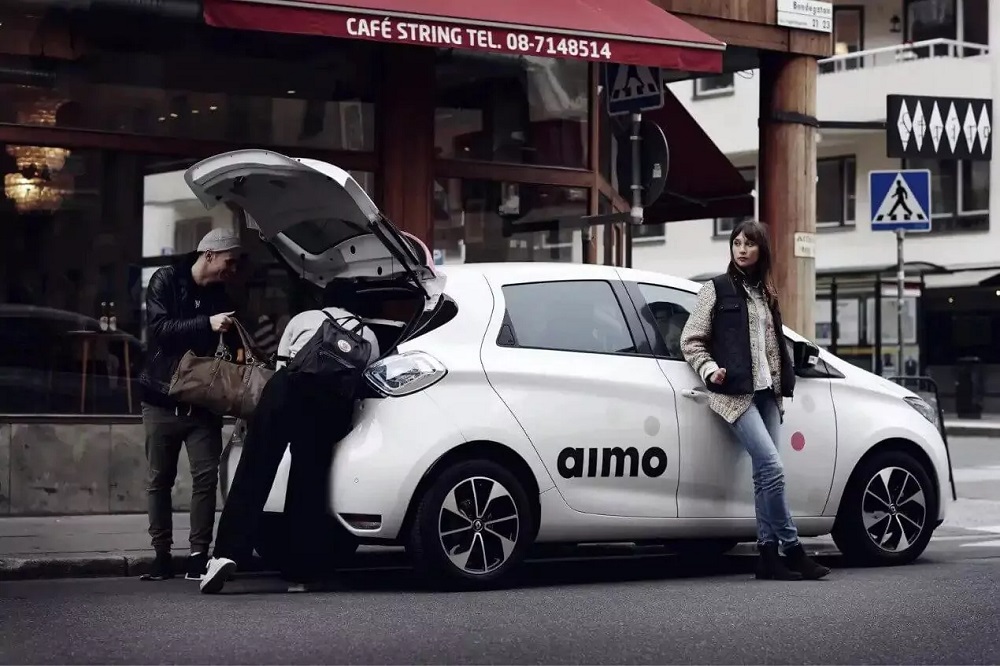
The global relationship with the personal automobile is undergoing a fundamental structural shift. For more than a century, vehicle ownership was considered a definitive rite of passage, symbolizing personal freedom and economic status. Families invested significant capital into purchasing vehicles, accepting the recurring financial burdens of insurance, maintenance, depreciation, and parking fees.
However, macroeconomics, rapid urbanization, and technological advancements have exposed the massive inefficiencies of this traditional model. Statistically, the average privately owned vehicle remains parked and idle for roughly 95 percent of its lifespan. In densely populated metropolitan centers, dedicating vast amounts of physical space to storing stationary metal is becoming unsustainable.
The emergence of the shared mobility ecosystem—encompassing on-demand ride-hailing, station-based car sharing, free-floating vehicle networks, and corporate fractional fleets—presents a highly efficient alternative. Driven by the convergence of mobile connectivity, algorithmic dispatching, electrification, and autonomous driving, the future of mobility is shifting from an asset-heavy ownership model to an on-demand service infrastructure.
The Transition to Multimodal and Unified Mobility Frameworks
The early era of shared mobility was characterized by fragmentation. Consumers used distinct, isolated mobile applications to hail a ride, book a short-term subcompact vehicle, rent a micro-mobility scooter, or purchase public transit tickets. This lack of integration created friction, forcing users to manually plan and coordinate every leg of a multi-part journey.
The Rise of Mobility-as-a-Service Platforms
The future of urban transportation depends on the perfection of Mobility-as-a-Service (MaaS) frameworks. MaaS platforms consolidate diverse transportation providers into a single digital interface. Through a unified app, a commuter can input a destination and receive a dynamically optimized itinerary that combines public subways, free-floating car-sharing networks, and last-mile electric scooters.
The software processes real-time transit schedules, vehicle locations, and street congestion data to chart the fastest, most cost-effective path. Payments are fully consolidated, allowing users to pay for the entire trip with a single biometric authorization or through a monthly, tier-based subscription model.
Unifying Fleet Utilization Logic
Mobility operators are shifting away from siloed business models to maximize the utilization rates of their fleets. Historically, a car-sharing vehicle sat idle during standard corporate working hours.
Modern mobility networks utilize algorithmic cross-deployment. A single vehicle asset can be deployed as a corporate commuter vehicle in the early morning, switch to an on-demand free-floating rental during the afternoon, and pivot to urban freight or e-commerce delivery logistics during late-night windows. This continuous operational velocity maximizes revenue per asset and lowers the total number of vehicles required to sustain urban logistics.
Artificial Intelligence and Predictive Operations
The profitability and reliability of modern car-sharing platforms depend on complex backend logistics. Managing a network of thousands of unanchored vehicles across a major metropolitan area requires advanced computational forecasting.
Algorithmic Demand Forecasting and Dynamic Repositioning
The primary operational bottleneck for free-floating car sharing is vehicle distribution asymmetry. Commuters naturally move vehicles from residential peripheral zones into commercial business districts every morning, leaving the suburbs depleted and the urban core over-saturated with parked cars.
Advanced predictive artificial intelligence resolves this imbalance by analyzing massive historical datasets, real-time regional weather disruptions, major entertainment event schedules, and local transit delays. The system accurately projects demand spikes hours in advance, allowing operators to dynamically reposition vehicles. This is achieved either via gig-economy support crews or by offering targeted financial incentives to users willing to drive a vehicle toward a high-demand zone.
Automated Fleet Diagnostics and Preventive Maintenance
Downtime is a major driver of losses in shared mobility operations. If a vehicle sits inoperable due to an undetected mechanical failure or a depleted battery, it drains corporate resources.
Future mobility networks leverage continuous telematics and cloud-based machine learning diagnostics. Vehicles constantly stream structural performance data—including brake pad wear indices, battery cell degradation rates, and tire pressure metrics—directly to central operations software. Predictive algorithms detect anomalies before a physical breakdown occurs, automatically routing the vehicle to a localized maintenance hub during low-demand periods.
The Intersection of Autonomous Driving and Shared Mobility
The ultimate realization of the mobility revolution occurs at the intersection of autonomous vehicle (AV) technology and shared networks. The integration of self-driving architectures eliminates the most volatile operational cost driver in the ride-hailing industry: human labor.
The Evolution of Robotaxi and Autonomous Ride-Pooling Ecosystems
When autonomous fleets achieve widespread regulatory approval and technical maturity, the concepts of traditional car rental and ride-hailing will merge into a single autonomous service. Autonomous ride-pooling networks utilize specialized dispatch algorithms to match multiple passengers traveling in similar directions, routing a self-driving shuttle to collect them seamlessly.
Because these vehicles run continuously without requiring driver shifts, mandatory rest breaks, or interior climate control adjustments for a driver’s comfort, the cost per passenger mile drops drastically. This economic reality makes autonomous ride-pooling less expensive than the total cost of maintaining a entry-level private passenger vehicle.
Reclaiming Urban Space from Parking Infrastructure
The systemic deployment of autonomous shared mobility will radically reshape the physical layout of modern cities. Because an autonomous shared vehicle stays in near-constant motion, the demand for static inner-city parking lots will drop significantly.
Municipalities can eliminate strict minimum parking requirements for new real estate developments. Multi-story urban parking structures can be converted into affordable housing complexes, localized green spaces, pedestrian zones, and micro-fulfillment centers, returning valuable real estate to the community.
Comparative Operational Dynamics of Future Mobility Formats
Analyzing the structural differences between legacy vehicle ownership and emerging shared mobility systems highlights the operational optimizations occurring across the industry:
Electrification and Smart Infrastructure Integration
The future of shared mobility is deeply linked with the global transition to clean energy. Shared fleets are adopting electric vehicle configurations at a much faster pace than individual consumers.
High-Volume Electrification Mechanics
Because shared mobility platforms operate on strict unit economics, the lower operational and fuel costs of electric drivetrains make them highly attractive. An electric vehicle features significantly fewer moving mechanical parts than an internal combustion engine, reducing routine wear-and-tear costs.
Furthermore, by concentrating large volumes of electric vehicles within managed corporate fleets, mobility operators can negotiate direct industrial power-purchasing agreements with clean energy grids, insulating operations from volatile retail fuel shocks.
Smart Grid Synergies
Shared mobility fleets act as critical infrastructure components for municipal smart grids. When thousands of connected electric cars are plugged into charging terminals across a city during peak solar generation hours, they function as a large, decentralized battery backup network.
Through bi-directional charging technology, the fleet can feed electricity back into the public grid during sudden regional power deficits and draw energy back when demand falls, helping stabilize the regional energy framework.
Frequently Asked Questions
How do modern car-sharing services protect user accounts from digital identity theft and unauthorized access?
Car-sharing platforms implement advanced security architectures that go far beyond standard username and password combinations. During onboarding, platforms leverage AI-driven identity verification software that matches a user’s real-time selfie against their official driver’s license records using biometric facial mapping. Furthermore, smartphone apps function as encrypted hardware tokens, requiring biometric validation before generating a short-range localized signal to unlock the physical vehicle doors.
What strategies do shared mobility networks employ to maintain vehicle cleanliness across multiple users?
Operators combine programmatic user accountability with automated tracking systems. Users are legally required to document the interior and exterior condition of the vehicle via smartphone photos before and after every rental session, creating a clear audit trail. If a customer leaves a vehicle dirty, the platform automatically levys a significant cleaning fine. Furthermore, fleet management software schedules regular dispatching loops to alert mobile cleaning crews to service highly utilized vehicles.
How will the widespread adoption of car-sharing networks impact domestic automotive manufacturing volumes?
While the aggregate number of individual vehicle sales will likely decrease as consumers abandon private ownership, the total manufacturing volume will not drop linearly. Shared mobility vehicles experience much higher daily utilization rates, causing them to accumulate miles rapidly and compress their overall operational lifespans. Consequently, fleet operators will need to refresh their vehicle assets far more frequently than a traditional consumer, sustaining steady industrial manufacturing demand.
In what ways are car-sharing platforms expanding access to rural and low-density suburban communities?
To serve low-density regions where free-floating models face financial challenges, operators partner with local governments through subsidized public-private partnerships. Municipalities integrate car-sharing slots directly into regional transit hubs, providing vital first-mile and last-mile connectivity options. Additionally, peer-to-peer car-sharing models allow private individuals in suburban communities to list their idle personal vehicles for rent, organically building local fleet density without massive corporate capital expenditures.
How do insurance liability frameworks function during a typical peer-to-peer car sharing transaction?
Peer-to-peer platforms insulate both the vehicle owner and the renter by providing primary commercial insurance policies that completely supersede the owner’s personal auto insurance during the active rental window. This corporate policy typically covers comprehensive physical damage, collision liabilities, and substantial third-party bodily injury claims. The owner’s personal premium remains unaffected, provided the rental was verified and logged through the platform’s official tracking software.
What are the main regulatory barriers currently slowing the expansion of autonomous ride-pooling services?
The primary regulatory hurdles center on building standardized, cross-jurisdictional safety frameworks and establishing definitive liability assignments for driverless accidents. Municipalities and state transportation agencies struggle to establish standardized performance benchmarks for autonomous driving logic under extreme weather conditions and complex urban construction zones. Until uniform safety certifications are codified globally, expansion will remain restricted to localized pilot testing zones.